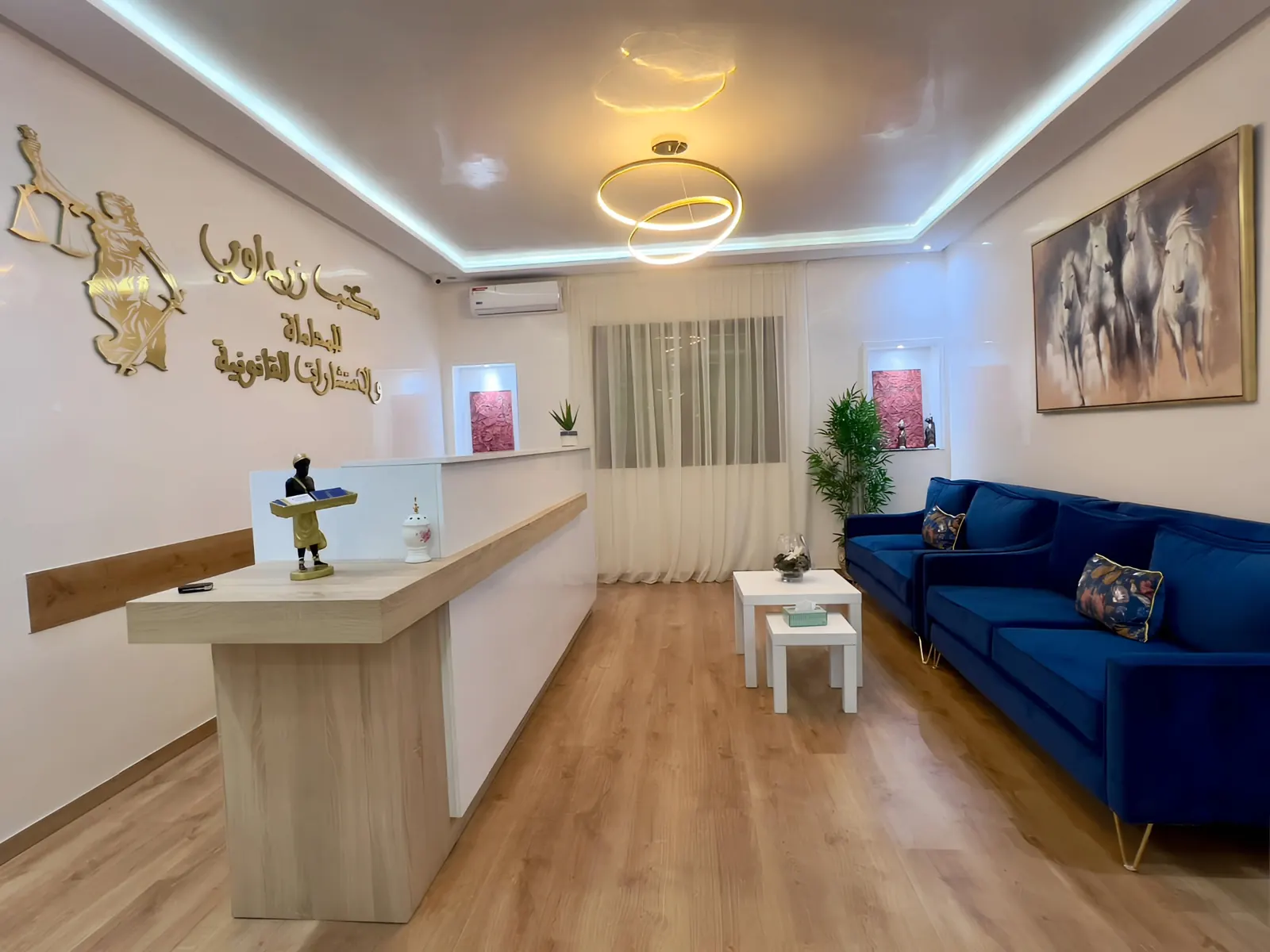
Family law — Moudawana

    Divorce lawyer in Marrakech under the Family Code

    The Moroccan Family Code (Law 70-03, known as the Moudawana) provides six divorce procedures, each with its conditions and procedure before the Family Court. Chourok Zerdaoui assists you in choosing the procedure suited to your situation and defending your rights and those of your children.

    Law firm in Marrakech — family law
    Chourok Zerdaoui — Marrakech firm

    Family law attorney

    Chourok Zerdaoui, Esq.

    Determined and attentive, Chourok Zerdaoui brings her expertise to defend her clients' interests in family disputes in Marrakech. She intervenes mainly in civil law, family law and criminal law, with particular care in sensitive situations involving children.

    • Divorce in all its forms (mutual consent, chiqaq, tatliq, khol')
    • Maintenance (nafaqa) — setting, revision, recovery
    • Custody (hadana) and child visitation rights
    • Inheritance and settlement of property rights
    • Recognition and contestation of paternity

    The six divorce procedures recognized by the Moudawana

    Since the 2004 Family Code reform (Law 70-03), Moroccan law recognizes six divorce procedures. The choice depends on the consent of the other spouse, the grounds invoked, the available evidence and financial objectives. A consultation identifies the procedure best suited to your situation.

    Divorce by mutual consent

    Article 114 — Law 70-03

    À l'initiative de : Both spouses, jointly

    The fastest procedure when both spouses agree on the principle of divorce and its consequences (maintenance, child custody, division). The court validates the agreement after verifying that the interests of minor children are preserved.

    • Written agreement signed before the court
    • Liquidation of financial and patrimonial effects
    • Decision generally rendered within 1 to 3 months

    Divorce for discord (chiqaq)

    Articles 94-97 — Law 70-03

    À l'initiative de : The wife or the husband

    The procedure most used by wives in Morocco. No specific cause needs to be proven: simply invoking persistent discord suffices. The judge exhausts conciliation attempts, then pronounces divorce and sets compensation.

    • Mandatory conciliation attempts (often 2 sessions)
    • Legal procedure deadline: 6 months maximum
    • The court assesses each spouse's responsibility to set compensation

    Talaq — divorce under judicial control

    Articles 78-93 — Law 70-03

    À l'initiative de : The husband

    The husband requests divorce; the court verifies his ability to assume the financial consequences (idda maintenance, mout'a consolation gift, child support) before authorizing the pronouncement.

    • Financial guarantee deposit by the husband
    • Assessment of wife's and children's rights
    • Registration of divorce by adouls once validated

    Tatliq — judicial divorce at the wife's request

    Articles 98-113 — Law 70-03

    À l'initiative de : The wife

    The wife petitions the court for a limited list of grounds: breach of a marriage contract condition, prejudice, lack of maintenance, prolonged absence, redhibitory defect or oath of anathema. Each case has its own procedure and standard of proof.

    • Legal grounds to invoke and prove
    • Production of testimonies, certificates or documents as applicable
    • Prejudice can be moral, physical or financial

    Khol' — divorce in exchange for compensation

    Articles 115-120 — Law 70-03

    À l'initiative de : The wife, with the husband's agreement

    The wife obtains divorce by returning all or part of the dowry (sadaq) or by paying negotiated compensation. Useful when the husband does not consent to divorce and other grounds are difficult to establish.

    • Husband's agreement on the compensation
    • No effect on children's rights (maintenance, custody)
    • The wife cannot waive her children's rights

    Divorce for absence or disappearance

    Articles 104-106 — Law 70-03

    À l'initiative de : The wife

    The wife may request divorce when the husband has been absent for more than a year and this absence causes her prejudice. An investigation is conducted to locate the spouse before the pronouncement.

    • Demonstrated absence exceeding one year
    • Prejudice caused by the absence
    • Prior judicial investigation

    Custody, maintenance and visitation rights after divorce

    Hadana — child custody

    Articles 163 to 186 of the Family Code set the custody rules. The mother has priority for young children, unless decided otherwise in the child's interest. At 15, the child may choose their custodial parent. Custody can be withdrawn from a parent who fails their obligations or endangers the child.

    The non-custodial parent has visitation and accommodation rights, set by the court based on the child's age, distance between residences and quality of relationships. The firm advocates for an organization that respects both parents' place.

    Nafaqa — child maintenance

    Nafaqa covers all essential needs of children: housing, food, clothing, schooling, medical expenses. The court sets the amount considering the debtor parent's income, the family's pre-divorce standard of living and the child's actual needs.

    In case of non-payment, enforcement procedures are available: wage seizure, bank seizure, even criminal prosecution for family abandonment. The amount may be revised if circumstances change (job loss, increased child needs).

    Steps of a divorce procedure before the Family Court

    Each procedure follows a path framed by the Family Code. The deadlines below are indicative and vary depending on the Marrakech jurisdiction, case complexity and parties' behavior.

    1. Preliminary consultation and procedure choice

      1 to 2 sessions

      Analysis of the marital situation, children involved and objectives: amicable or contentious? Identification of the most appropriate legal grounds (chiqaq, mutual consent, tatliq…) based on available documents and the other spouse's position.

    2. Case file preparation and filing with the Family Court

      1 to 3 weeks

      Collection of the adoulaire marriage certificate, ID copies, family record book, income statements, prejudice evidence if applicable, photos and useful written exchanges. Filing of the introductory petition with submissions and ancillary requests (maintenance, custody).

    3. Summons and conciliation attempts

      1 to 3 months

      The court summons both spouses. Conciliation attempts are mandatory (Article 81). If children are involved, two sessions are organized at least 30 days apart. Personal attendance of spouses is required.

    4. Substance hearings and investigation

      2 to 4 months

      Production of evidence, witness hearings, possible expertise (medical, financial). The court sets subsistence maintenance during the procedure and rules on the family residence and provisional custody if necessary.

    5. Divorce judgment and consequence determination

      Reasoned decision

      Pronouncement of divorce, setting of custody (hadana), visitation rights, maintenance (nafaqa), consolation gift (mout'a) and idda maintenance. For chiqaq, the court must rule within 6 months maximum.

    6. Idda and final registration

      3 months after judgment

      3-month idda waiting period for the wife before remarriage is possible. The divorce is registered by the adouls on the marriage certificate. Possibility of appeal within 15 days following notification.

    Documents to prepare for your case

    Gather these documents before the first consultation to save time and obtain a precise analysis from the start:

    • ·Adoulaire marriage certificate (or transcription if married abroad)
    • ·Copy of both spouses' ID
    • ·Family record book and children's birth certificates
    • ·Pay slips, income certificates, tax notices
    • ·Expense proofs (rent, schooling, medical care)
    • ·Useful written exchanges (SMS, mail, emails)
    • ·Reports, medical certificates, complaints (if prejudice)
    • ·Property titles or rental contracts of the marital home

    Initiate a divorce procedure in Marrakech?

    A first consultation identifies the divorce procedure suited to your situation and prepares a solid file for the Family Court.

    Questions fréquentes

    For divorce by mutual consent: 1 to 3 months in practice. For divorce for discord (chiqaq), the court must rule within 6 months maximum under Article 97 of Law 70-03. Other procedures (tatliq, khol') generally take 6 to 12 months depending on the complexity of the evidence required.